For instance, Upper Deck Resort reported that the Tripdairy chatbot successfully answered guest questions and managed basic customer service inquiries. This helped the resort gain better insights into guest needs and preferences. As a result, the hotel experienced a 35% increase in direct bookings.


Digitalization in Hospitality Industry: Key Benefits and Challenges
Dec. 15, 2025
845

Table of Contents
In 2027, ABI Research expects 6.4 million smart hotel room devices to ship worldwide. That’s double the 3.2 million smart hotel room devices shipped in 2022. The hospitality industry has always been centered on customer service, comfort, and memorable experiences. However, in today’s fast-moving digital world, traditional methods are no longer enough to meet guest expectations. Hotels, restaurants, resorts, and travel businesses are increasingly adopting digital tools to stay competitive. This transformation, known as Digitalization in Hospitality Industry, is reshaping how businesses operate and how customers interact with services.
In this blogpost, we will dig deeper into the major advantages and challenges of digitalization in the hospitality sector.
|
Key Area |
Takeaways |
|
Industry Growth |
Smart hotel technology is growing fast, with 6.4 million smart room devices expected by 2027, showing strong digital adoption. |
|
Guest Experience |
Digital tools improve comfort, speed, and personalization through mobile check-ins, smart rooms, and online bookings. |
|
Business Efficiency |
Automation reduces manual work, saves time, and helps staff focus more on guest service. |
|
Data & Decisions |
Real-time data helps hotels understand guest behavior, plan pricing, and improve services. |
|
Revenue Growth |
Digital platforms increase bookings, enable dynamic pricing, and support upselling opportunities. |
|
Safety & Security |
Contactless services and secure digital payments improve hygiene and build guest trust. |
|
Key Challenges |
High costs, staff training needs, data security risks, and system failures must be managed carefully. |
|
Future Outlook |
AI, IoT, and smart hotel technologies will shape the future, making early digital adoption a competitive advantage. |
What is Digitalization in Hospitality Industry?
Digitalization refers to the use of digital technologies to improve business processes, customer experiences, and decision-making. In hospitality, it includes tools such as online reservation systems, customer relationship management (CRM) software, mobile apps, digital payments, data analytics, and automation.
The Digitalization in Hospitality Industry is not just about replacing manual systems with software. It is about creating seamless, personalized, and efficient experiences for guests while improving operational performance for businesses.
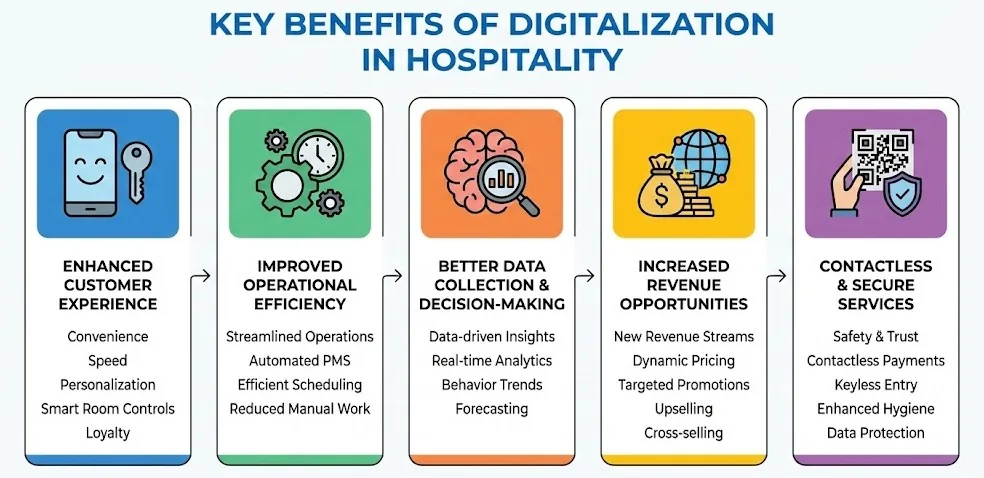
Key Benefits of Digitalization in the Hospitality Industry
Customer Experience
One of the biggest benefits of digitalization is improved customer experience. Today’s guests expect convenience, speed, and personalization. Digital tools make this possible.
Online booking platforms allow guests to reserve rooms or tables anytime, from anywhere. Mobile check-in and check-out reduce waiting times at reception desks. Smart room technologies enable guests to control lighting, temperature, and entertainment through their smartphones.
Operational Efficiency
Digitalization helps hospitality businesses streamline their daily operations. Automated systems reduce manual work, minimize errors, and save time.
For example:
- Property management systems (PMS) manage room availability, housekeeping schedules, and billing.
- Inventory management software tracks food supplies and reduces waste.
- Automated scheduling tools help manage staff shifts efficiently.
These systems allow managers to focus more on service quality rather than administrative tasks. As a result, operations become faster, smoother, and more cost-effective.
Data Collection and Decision-Making
Data is a powerful asset in the hospitality industry. Digital systems collect valuable data about customer behavior, booking patterns, seasonal trends, and service performance.
With data analytics tools, businesses can:
- Identify peak seasons and plan pricing strategies
- Understand customer preferences and improve offerings
- Forecast demand more accurately
- Measure customer satisfaction through reviews and feedback
The Digitalization in Hospitality Industry enables managers to make informed decisions based on real-time data rather than guesswork, leading to better business outcomes.
Increased Revenue Opportunities
Digital platforms open new revenue streams for hospitality businesses. Online travel agencies (OTAs), social media marketing, and direct booking websites increase visibility and reach a global audience.
Dynamic pricing tools allow hotels to adjust room rates based on demand, season, and market trends. Upselling and cross-selling become easier through digital channels, such as offering room upgrades, spa services, or dining deals during the booking process.
With that said, the digital marketing tools help businesses run targeted promotions, reducing marketing costs while increasing conversion rates.
Secure Services
The demand for contactless services has grown significantly in recent years. Digitalization enables contactless payments, digital menus, QR-code ordering, and keyless room entry.
These solutions not only improve convenience but also enhance hygiene and safety. Secure digital payment systems protect customer data and reduce the risk of fraud, building trust between guests and service providers.
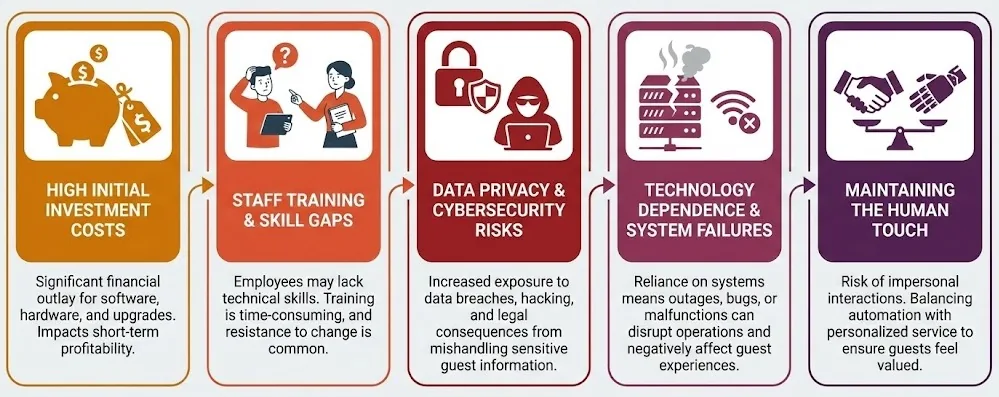
Key Challenges of Digitalization in the Hospitality Industry
While the benefits are significant, digitalization also presents several challenges that hospitality businesses must address.
High Initial Investment Costs
One of the major challenges is the cost of implementing digital technologies. Software systems, hardware upgrades, cybersecurity measures, and staff training require significant financial investment.
Small and medium-sized hospitality businesses may struggle to afford advanced digital solutions. Without proper planning, these costs can impact profitability, especially in the early stages of digital transformation.
Staff Training and Skill Gaps
Digital tools are only effective if employees know how to use them properly. Many hospitality workers may not have the technical skills required to operate advanced systems.
Training staff takes time and resources. Resistance to change is also common, especially among employees who are used to traditional methods. Poor adoption of technology can reduce efficiency instead of improving it.
To overcome this challenge, businesses must invest in continuous training and create a supportive learning environment.
Data Privacy and Cybersecurity Risks
With digitalization comes the responsibility of handling sensitive customer data. Personal information, payment details, and booking records must be protected from cyber threats.
The Digitalization in Hospitality Industry increases exposure to risks such as data breaches, hacking, and system failures. A single security incident can damage a company’s reputation and result in legal consequences.
Hospitality businesses must implement strong cybersecurity measures, comply with data protection regulations, and regularly update their systems to minimize risks.
Technology Dependence and System Failures
Over-reliance on technology can become a problem when systems fail. Internet outages, software bugs, or hardware malfunctions can disrupt operations and negatively affect guest experiences.
For example, if a booking system crashes, reservations may be lost or duplicated. If digital key systems fail, guests may face access issues. These situations can lead to frustration and service delays.
Businesses must have backup systems and contingency plans to ensure smooth operations during technical issues.
Maintaining the Human Touch
Hospitality is fundamentally about human interaction and personalized service. One concern with digitalization is the potential loss of the “human touch.”
Automated check-ins, chatbots, and self-service kiosks may feel impersonal to some guests. While technology improves efficiency, it should not completely replace human interaction.
Successful digital transformation finds the right balance between technology and personal service, ensuring guests still feel valued and cared for.
Read more about the The Future of AI Chatbots: Trends to Watch in 2026 and Beyond
Future of Digitalization in Hospitality
The future of hospitality will continue to be shaped by digital innovation. Technologies such as artificial intelligence, machine learning, virtual reality, and the Internet of Things (IoT) are expected to play a bigger role.
AI-powered chatbots will provide 24/7 customer support. Predictive analytics will help businesses anticipate guest needs. Virtual tours will allow customers to explore properties before booking. Smart hotels will offer highly personalized, connected experiences.
Conclusion
At CodeSuite, we help hospitality businesses simplify digital adoption by integrating powerful Digital Adoption Platforms (DAPs) into their operational ecosystems. With a DAP , hospitality companies can empower hotel managers and staff through in-app guidance, contextual onboarding, and real-time training.
The key to success lies in strategic planning, choosing the right technologies, and focusing on both technology and people. When implemented thoughtfully, Digitalization in Hospitality Industry can lead to sustainable growth, stronger customer relationships, and long-term success in an increasingly digital world.
Table of Content