
The Future of AI Chatbots: Trends to Watch in 2026 and Beyond
Nov. 28, 2025
969

Table of Contents
Let's start with some eye-opening statistics that show just how massive this transformation really is:
- $27.29 billion – That's what the global chatbot market will be worth by 2030, growing at a staggering 23.3% annually
- 95% – The percentage of customer interactions expected to be AI-powered by 2025
- $300,000+ – Average annual cost savings businesses are seeing from chatbot implementation
These numbers tell us one thing loud and clear: AI chatbots aren't just a trend anymore. They're becoming as essential to business as email or your company website.
From Simple Scripts to Smart Partners
Remember when chatbots could barely understand "Hello, I need help"? Those days are ancient history. AI chatbots have evolved from those clunky, script-following programs into intelligent digital partners that can actually understand context, emotions, and complex problems.
Today's chatbots handle millions of conversations every single day. They're not just answering questions, they're processing returns, booking appointments, analyzing images, and even predicting what customers need before they ask. This isn't science fiction. It's happening right now in 2025, and it's about to get even more interesting.
Five Trends Reshaping AI Chatbots
1. Agentic AI
This is the biggest revolution happening in the AI chatbot world. We're moving from chatbots that simply respond to your questions to AI agents that actually take action and get stuff done.
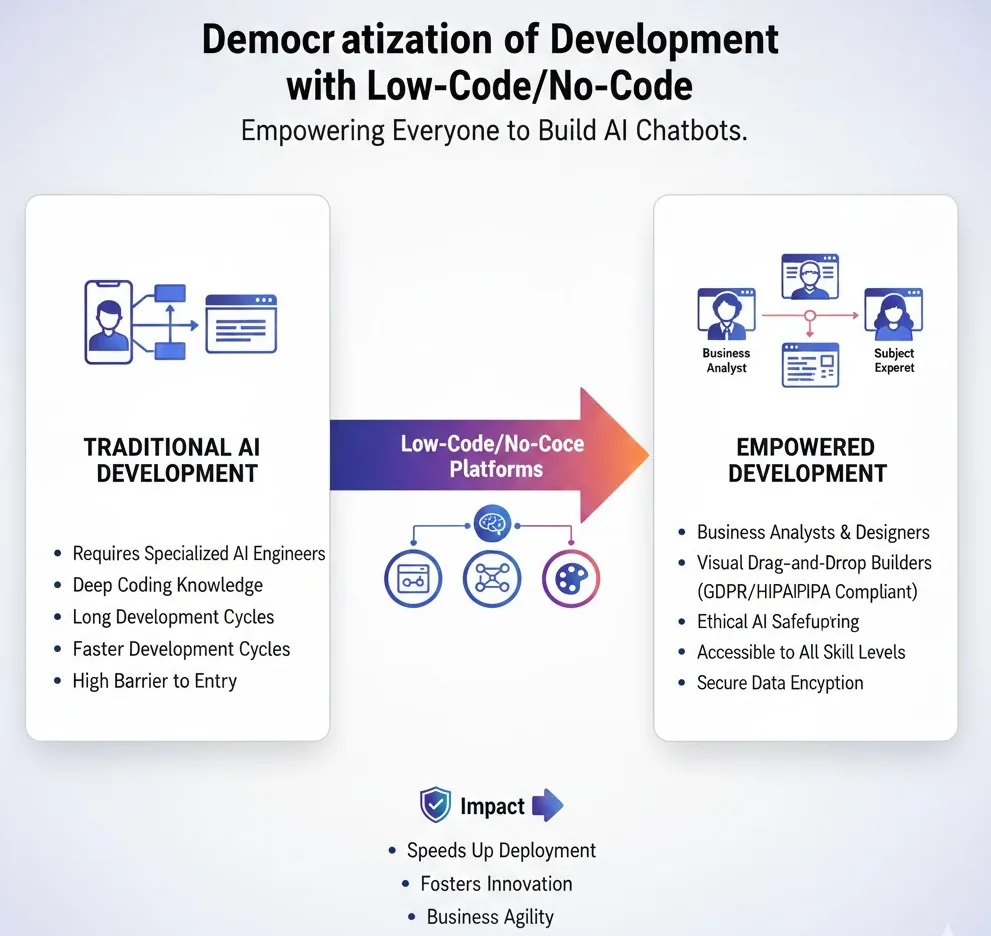
What makes Agentic AI different?
Think of it this way: Traditional chatbots are like helpful assistants who answer your questions. Agentic AI is like having a proactive teammate who not only understands what needs to be done but goes ahead and does it.
These systems can plan multiple steps, use different tools (like your CRM, payment systems, and inventory databases), and complete entire workflows without you having to hold their hand.
Instead of just telling you how to process a product return, an Agentic AI chatbot will initiate the return, schedule the pickup, update your inventory system, and issue the refund, all from one conversation. It's not just helping anymore; it's doing the actual work.
According to recent research, the global autonomous agents market is projected to reach an incredible $103.28 billion by 2034, growing at a mind-blowing 42.19% annually.
Read more about the A Comprehensive Breakdown of Chatbot Features and Their Impact on Development Price
2. Emotional Intelligence
The next generation of chatbots won't just understand what you're saying, they'll understand how you're feeling when you say it.
Here's what's changing:
- Advanced AI can now detect when you're frustrated, confused, happy, or satisfied just from your message tone
- Based on your emotions, the bot adjusts its communication style, tone, and even the actions it takes
- In 2025, voice-enabled chatbots can pick up on stress levels, urgency, and other emotional cues from the way you speak
This emotional IQ makes interactions feel less robotic and more human. If you're upset about a delayed order, the chatbot recognizes your frustration and prioritizes your issue, maybe even offering compensation automatically.
3. Multimodal Magic
Gone are the days when you had to describe everything in words. Modern chatbots in 2025 and beyond can see, hear, and understand multiple types of information at once.
What does this mean for you?
- Send a photo of a damaged product, and the bot instantly understands the problem and starts processing your replacement
- Ask a question by voice while driving, and get a detailed response read back to you
- Upload a document, and watch the bot extract the key information and take appropriate action
- Share a video showing a technical issue, and receive step-by-step troubleshooting in real-time
According to market research, the multimodal AI market is projected to reach $4.5 billion by 2028. Businesses implementing multimodal chatbots report up to 85% improvement in customer satisfaction rates and can automate 92% of customer inquiries.
This cross-channel capability creates seamless experiences, you could start a conversation on Instagram, continue it via email, and finish with a payment on WhatsApp without losing any context.
4. Specialist Bots
While general chatbots are useful, the future belongs to specialized AI experts trained specifically for your industry.
Why specialization matters:
General AI models are trained on everything, which makes them versatile but sometimes unreliable for specific, technical, or regulated tasks. They can "hallucinate" (make up information) when they don't know something.
Industry-specific chatbots are different. They're trained on specialized, verified data for specific fields:
- Patient triage bots that follow HIPAA regulations and provide accurate symptom checking
- Contract review bots that understand complex legal terminology and compliance requirements
- Fraud detection bots trained on millions of transaction patterns
- Product recommendation engines that truly understand your inventory and customer preferences
This specialization means higher accuracy, better compliance with regulations, and deeper usefulness for complex business needs.
5. Privacy-First AI
As data privacy concerns grow worldwide (think GDPR, CCPA, and other regulations), the demand for secure AI is skyrocketing.
Two major shifts happening:
On-Device Processing: Instead of sending all your data to the cloud, newer AI models can run directly on your phone or laptop. This means your sensitive information never leaves your device, it's processed locally, ensuring maximum privacy while still delivering powerful AI capabilities.
Compliance Built-In: Modern chatbots now come with audit trails, compliance monitoring, and accountability features built right into their architecture. This is especially critical for industries like healthcare, finance, and legal services where data protection isn't just nice to have—it's legally required.
Anyone Can Build a Bot
Here's something exciting: You don't need to be a tech genius to create powerful AI chatbots anymore.
Low-code and no-code platforms are democratizing AI development. Business analysts, customer service managers, and even non-technical team members can now design, deploy, and manage sophisticated AI agents using simple drag-and-drop interfaces.
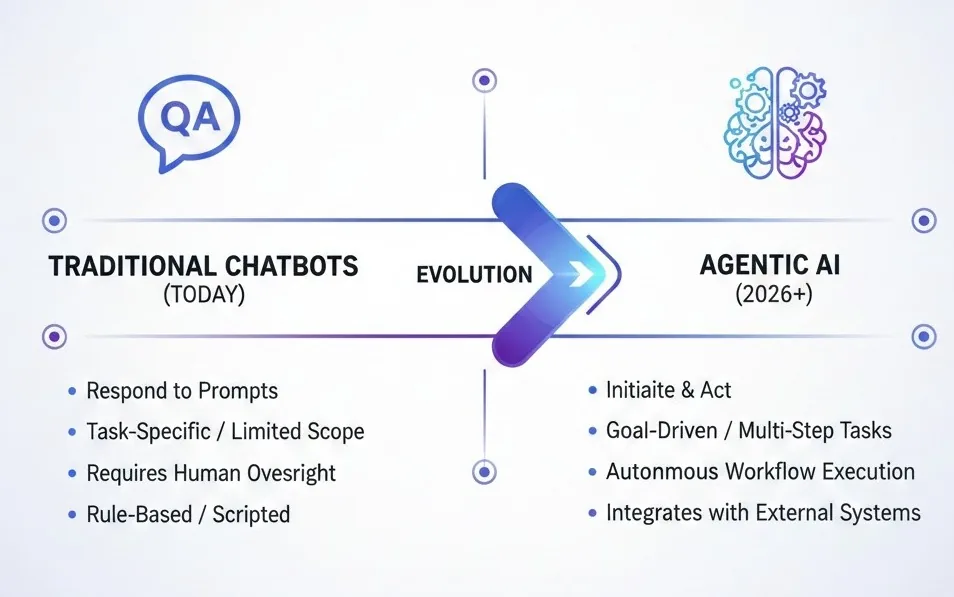
What this means:
- Faster deployment (days instead of months)
- Lower costs (no need to hire specialized AI engineers)
- More experimentation (quickly test and iterate on customer experience strategies)
- Empowered teams (subject matter experts can directly build the tools they need)
What About Human Workers?
Here's the good news: As AI chatbots become more autonomous, human jobs aren't disappearing, they're evolving into something better.
The new human role:
- Stepping in when the AI encounters unusual or high-risk situations that need human judgment
- Focusing on strategic, creative tasks that require genuine human empathy, leadership, and abstract thinking
- Designing ethical guidelines, policies, and continuous training to ensure AI agents operate fairly and reliably
Think of it like this: The boring, repetitive work gets automated, freeing humans to do the interesting, meaningful work that actually requires human skills.
What's Next? The Road Ahead
The future of AI chatbots isn't just about smarter software, it's about fundamentally changing how businesses create value and manage relationships with customers.
Expect to see:
- Chatbots that proactively reach out with helpful information before you ask
- Seamless integration across every business system and customer touchpoint
- Truly conversational AI that feels indistinguishable from talking to a knowledgeable human
- Industry-specific AI assistants that become indispensable business tools
- Transparent, ethical AI with built-in safeguards and accountability
The transformation is happening faster than most people realize. By 2027, 25% of businesses will use chatbots as their primary support channel. By 2028, at least 15% of work decisions will be made autonomously by agentic AI.
The Bottom Line
AI chatbots are no longer futuristic technology, they're present-day business infrastructure. The companies investing in comprehensive, forward-looking AI strategies today will be the market leaders tomorrow.
Whether you're a business owner, marketer, developer, or just someone curious about technology, understanding these trends isn't optional anymore. The chatbot revolution is here, and it's transforming every industry it touches.
The question isn't whether to adopt AI chatbots. The question is: How quickly can you get started?