
Which AI Agent Should You Start With First: Sales, Support, or Ops?
Jan. 29, 2026
803

Table of Contents
- Why AI Agents Have Become a Business Necessity
- Understanding Sales, Support, and Operations AI Agents
- Why Customer Support AI Delivers the Fastest ROI
- When Sales AI Agents Make More Business Sense
- How Operations AI Agents Improve Efficiency and Reduce Costs
- How to Decide Which AI Agent to Start With
- Turning AI Interest into Qualified Business Leads
- Launching Your First AI Agent Successfully
- Final Thoughts on Choosing the Right AI Agent
Choosing the right AI agent to start with is not about adopting the most advanced or trendy technology. It is about answering one simple business question: where will AI deliver the fastest return on investment? Companies that approach AI adoption with a clear ROI mindset move faster, avoid wasted effort, and see measurable results. Today, AI agents are already running real processes in sales, customer support, and operations, and businesses that delay risk falling behind competitors who are already capturing value.
Why AI Agents Have Become a Business Necessity
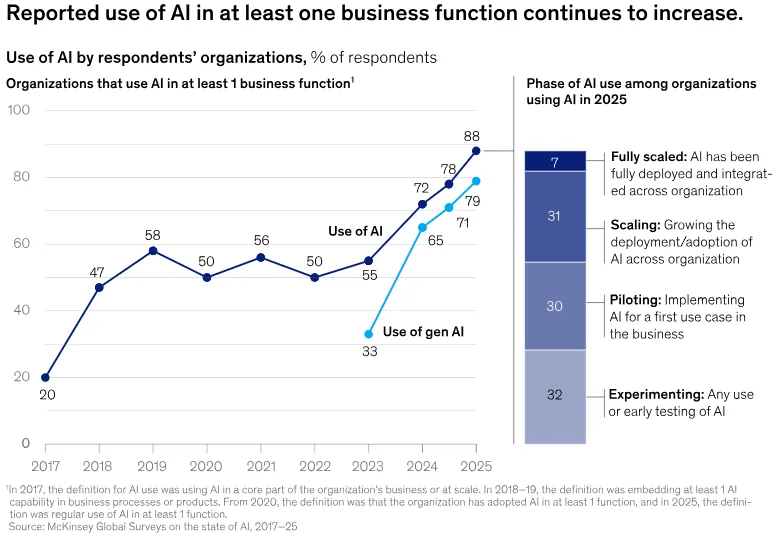
AI agents are no longer experimental tools. Around 78% of organizations now use AI in at least one business function, a major jump from previous years. The global AI agents market is valued at over USD 7.5 billion in 2025, and adoption continues to accelerate across industries.
Businesses report an average 3.7x return for every dollar invested in generative AI, proving that AI agents are delivering real financial impact. The risk today is not experimenting with AI, but choosing the wrong starting point and failing to show early results.
What are Operations AI Agents?
Support AI agents are designed to improve customer experience by answering common questions, resolving basic issues, and routing complex cases to human agents. Because customer support relies heavily on repeat questions and documented knowledge, AI performs especially well in this area. Many organizations now resolve 50–65% of customer inquiries without human involvement, leading to faster response times and lower support costs.
Operations AI agents work behind the scenes to improve internal efficiency. They automate repetitive admin tasks, generate reports, move data between tools, and monitor key metrics. While their impact is less visible externally, ops AI agents quietly remove friction across teams. Analysts expect 15% of daily business decisions to be handled by AI agents by 2028, with operational costs dropping significantly over time.
| Dimension | Sales AI Agent | Support AI Agent | Ops AI Agent |
|---|---|---|---|
| Primary goal | Increase revenue and conversions | Resolve tickets faster, improve experience | Cut internal costs, reduce manual work |
| Typical ROI timeline | 2–6 months once integrated | 1–3 months for first savings | 2–6 months depending on process |
| Impact metric | Win rate, pipeline velocity | Resolution time, deflection rate | Cost per process, error rate |
| Team affected | SDRs, AEs, sales ops | Support reps, success managers | Ops, finance, admin, leadership |
| Best if you struggle with | Follow‑up, prioritization, forecasting | Volume, repetitive questions, slow replies | Spreadsheets, reporting, hand‑off delays |
Why Customer Support AI Delivers the Fastest ROI?
For many businesses, customer support is the easiest and fastest place to start with AI agents. Support processes are highly repetitive, and most companies already have FAQs, help articles, or standard operating procedures that can be turned into AI responses. Around 30–35% of mid-to-large enterprises already use AI agents for first-line support, and adoption continues to grow. Our latest survey shows a larger share of respondents reporting AI use by their organizations, though most have yet to scale the technologies.
Support AI agents typically deliver results within weeks. Companies see 20–30% reductions in support costs and 25–40% faster resolution times after implementation. Customer behavior also supports this shift, as 81% of customers prefer AI-powered self-service before speaking to a human. For organizations struggling with ticket backlogs, slow replies, or rising support costs, support AI is often the best first investment.
When Sales AI Agents Make More Business Sense
Sales AI agents are a strong starting point when a business already has leads but struggles with follow-up, prioritization, or administrative overload. Sales teams often spend more time updating CRM systems and writing emails than actually selling. AI agents reduce this burden, saving sales representatives around 12 hours per week on non-selling tasks.
The revenue impact of sales AI is well documented. Research shows that 83% of sales teams using AI report revenue growth, compared to teams without AI support. Sales AI agents improve consistency, speed, and personalization across outreach efforts, leading to higher conversion rates and shorter sales cycles. While sales AI may take slightly longer than support AI to show ROI, the financial upside is often greater.
How Operations AI Agents Improve Efficiency and Reduce Costs
Operations AI agents are ideal for organizations dealing with slow, manual internal processes. Reporting that takes days, frequent copy-paste work between systems, and errors caused by manual hand-offs are clear signs that ops AI can help. These agents automate routine workflows, improve data accuracy, and free up employees to focus on higher-value work.
Although ops AI agents may not produce immediate customer-facing results, their long-term impact is substantial. Analysts predict that agentic AI could reduce operational costs by around 30% by 2029. For businesses focused on scalability, efficiency, and cleaner internal processes, operations AI agents provide a strong foundation for future growth.
How to Decide Which AI Agent to Start With
The best AI agent to start with depends on where your business feels the most friction. If customer service teams are overwhelmed and response times are affecting satisfaction, a support AI agent is usually the smartest first step. If leads are being generated but not converted due to poor follow-up or administrative overload, a sales AI agent makes more sense. If internal processes are slow, fragmented, and error-prone, an operations AI agent is likely to deliver the most value.
Rather than trying to automate everything at once, successful companies focus on solving one clear problem. This approach builds confidence, demonstrates ROI quickly, and creates momentum for broader AI adoption across the organization.
Turning AI Interest into Qualified Business Leads
As interest in AI agents grows, many businesses struggle to convert that interest into action. Decision-makers want proof of value before committing budget. A strong lead magnet can help bridge this gap. One effective option is a “Free 7-Day AI Agent ROI Snapshot.” This short assessment asks companies for basic operational inputs and estimates potential time and cost savings from sales, support, and operations AI agents.
This approach works because 54% of business leaders expect AI to deliver cost savings, and many expect productivity improvements of over 10%. With 92% of organizations planning to invest in generative AI, tools that clarify where to start help move prospects from curiosity to decision.
Final Thoughts
AI agents are no longer optional for businesses that want to stay competitive. The key to success is not adopting AI everywhere, but starting where it delivers the fastest and clearest ROI. Whether that is sales, support, or operations depends on your biggest bottleneck today. Choose wisely, prove value quickly, and expand with confidence.