

AI in EdTech: Use Cases, Common Challenges, and How to Overcome Them
Sept. 29, 2025
1002

Table of Contents
The global AI in education market is expected to grow from $5.18 billion in 2024 to $112.3 billion by 2034. Artificial Intelligence (AI) is changing the way we learn, teach, and manage education. From smart tutors to automated grading, AI is helping students and teachers save time, improve learning outcomes, and make education more accessible.
AI is becoming a vital part of how students learn and how teachers teach. In fact, 65% of students and 71% of teachers believe that AI tools are essential for success in college and future careers. That’s a strong vote of confidence in technology’s role in education.
In this blog post, I’ll dig deeper into the uses of AI in EdTech, the common challenges schools and developers face, and how to overcome them. I’ll also touch on how lessons from AI in EdTech can guide better adoption in education.
Why AI Matters in Education?
Education today faces many challenges: rising costs, unequal access, and the need for personalized learning. AI offers smart solutions to these problems. It can:
- Analyze student performance
- Recommend personalized learning paths
- Automate repetitive tasks
- Provide 24/7 support through chatbots and virtual tutors
The global AI in EdTech market was valued at $5.88 billion in 2024 and is expected to reach $98.1 billion by 2034, growing at a CAGR of 38.3%. That’s a huge leap, showing how important AI is becoming in education.
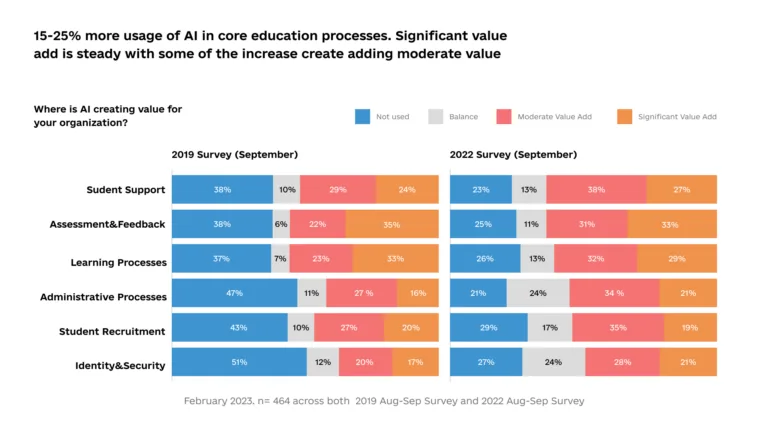 Top Use Cases of AI in EdTech
1. Personalized Learning
AI helps tailor lessons to each student’s needhs. It tracks progress and adjusts the difficulty level, pace, and content accordingly. Tools like DreamBox and Century Tech use adaptive learning to close gaps and keep students engaged.
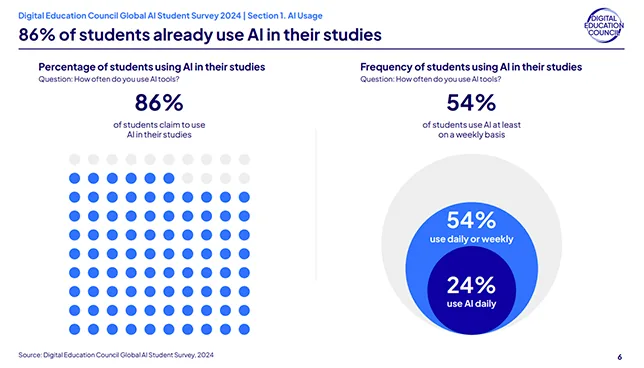
In fact, 86% of students now use AI for their studies, and over half use it weekly. Personalized learning boosts motivation and helps students succeed.
2. Virtual Tutors and Chatbots
AI-powered tutors like Khanmigo (developed by Khan Academy using OpenAI’s GPT) offer real-time help, answer questions, and guide students through lessons. These tools are especially helpful for students who don’t have access to human tutors. Teachers spend hours grading assignments. AI can reduce grading time from six hours to just 20 minutes. It can evaluate multiple-choice, short answers, and even essays. This gives students faster feedback and frees up teachers to focus on teaching.
AI can generate quizzes, flashcards, summaries, and even textbooks. This helps teachers prepare materials faster and ensures content is up-to-date. Platforms like Snapplify use AI to summarize textbooks and recommend personalized content. AI can spot students who are struggling or at risk of dropping out. It analyzes behavior, performance, and engagement to suggest early interventions. This helps schools improve retention and student success.
3. Administrative Automation
AI can automate tasks like scheduling, attendance tracking, and managing student records. This reduces paperwork and improves efficiency. AI also helps educators focus more on teaching and less on admin work. According to a 2023 report from the UK Department for Education, participating teachers and middle leaders spent an average of two hours per day on administrative tasks, such as managing enrollments and conducting routine assessments.
AI powers interactive simulations and games that make learning fun and hands-on. For example, driving simulators use AI to create real-world scenarios that challenge students to make decisions.
AI also helps make education more inclusive. Features like speech-to-text, real-time translation, and content summarization support students with disabilities and non-native speakers.
Common Challenges in AI Adoption
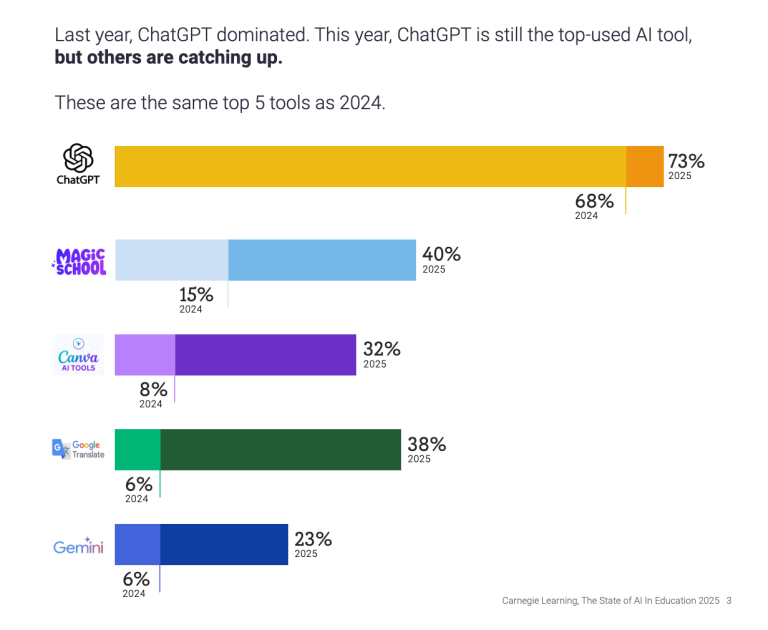
Carnegie Learning published a great little report, “The State of AI in Education 2025” which is essentially key findings from a national survey they conducted on hundreds of educators. Not too surprisingly, the #1 potential benefit of students using AI was the newest answer choice added to this year’s survey: increasing student engagement. On the district administration level, in 2024, 20% of schools/districts had AI policies; in 2025, 40% have them. Despite its benefits, AI in EdTech faces several hurdles.
Let’s look at the most common ones and how to solve them.
1. Lack of Technical Expertise
Many schools don’t have the skills to build or manage AI tools. According to IBM, 42% of executives say lack of expertise is a major barrier.
Solution: Partner with AI development companies that specialize in education. Outsourcing can save time and money while ensuring quality.
2. Data Privacy and Security
AI systems need lots of student data, which raises privacy concerns. In the UK, 35% of educators worry about data risks.
Solution: Follow regulations like FERPA and GDPR. Use encryption, secure storage, and clear consent policies. Lessons from AI in Fintech, where data protection is critical, can guide best practices in education.
3. Unequal Access to Technology
Not all schools have the infrastructure to use AI. Rural and low-income areas may lack devices or internet access.
Solution: Governments and organizations should invest in digital infrastructure and teacher training. Public-private partnerships can help bridge the gap.
Read more about the E learning Services by Codesuite
4. Limited Teacher Readiness
Many teachers don’t know how to use AI tools effectively. This leads to underuse or misuse.
Solution: Provide ongoing training and support. Platforms like Microsoft and OpenAI offer teacher training hubs to build confidence and skills.
Students may misuse AI to cheat or plagiarize. This raises concerns about fairness and learning outcomes.
Solution: Schools should set clear rules for AI use. Assignments should focus on reasoning and process, not just answers.
AI can sometimes give wrong or biased answers. This can mislead students and reduce trust.
Solution: Use well-curated data and regularly audit AI models. Monitor performance and update algorithms to reduce bias.
Real-World Examples
Khan Academy’s Khanmigo
Used in over 266 U.S. school districts, Khanmigo offers personalized tutoring and teacher support. It helps students think independently and improves engagement.
Squirrel AI
This Chinese platform breaks down curriculum into 10,000+ knowledge points and creates personalized learning paths. It’s used in 2,000+ learning centers and has shown strong results.
QANDA by Mathpresso
With 8 million monthly users, QANDA uses OCR and MathGPT to solve math problems and provide step-by-step solutions.
What EdTech Can Learn from AI in Fintech?
The AI in Fintech sector has already tackled many challenges that EdTech is now facing:
- Fintech companies use advanced encryption and compliance tools.
- AI in Fintech handles millions of transactions daily, showing how AI can scale efficiently.
- Fintech builds trust through transparency and reliability, something EdTech must also prioritize.
By adopting similar strategies, EdTech can accelerate AI adoption while avoiding common pitfalls.
Read more about AI FOR FINTECH SOFTWARE: THE BEST USE CASES FOR YOUR BUSINESS
Final Thoughts
AI is not just a buzzword, it’s a powerful tool that’s reshaping education. From personalized learning to predictive analytics, AI helps students learn better and teachers teach smarter. But to unlock its full potential, schools must overcome challenges like data privacy, access, and training.
With the right tools, policies, and partnerships, AI can make education more inclusive, efficient, and engaging. And by learning from sectors like, EdTech can build a future where every student gets the support they need to succeed.
The e-learning sector has great potential for entrepreneurs to make a significant impact on education today. Creating fresh and engaging e-learning software may seem challenging initially. However, with the assistance of technical specialists, you can design effective e-learning software.
Many organizations aspire to be part of the digital transformation, therefore making personalized e-learning solutions potentially profitable. CodeSuite, an e-learning software development company, can help you create the necessary e-learning software.
Our e-learning software developemnent services expertise in software development and can assist companies with challenging aspects of their projects. Contact us if you need professional guidance on creating innovative e-learning software.